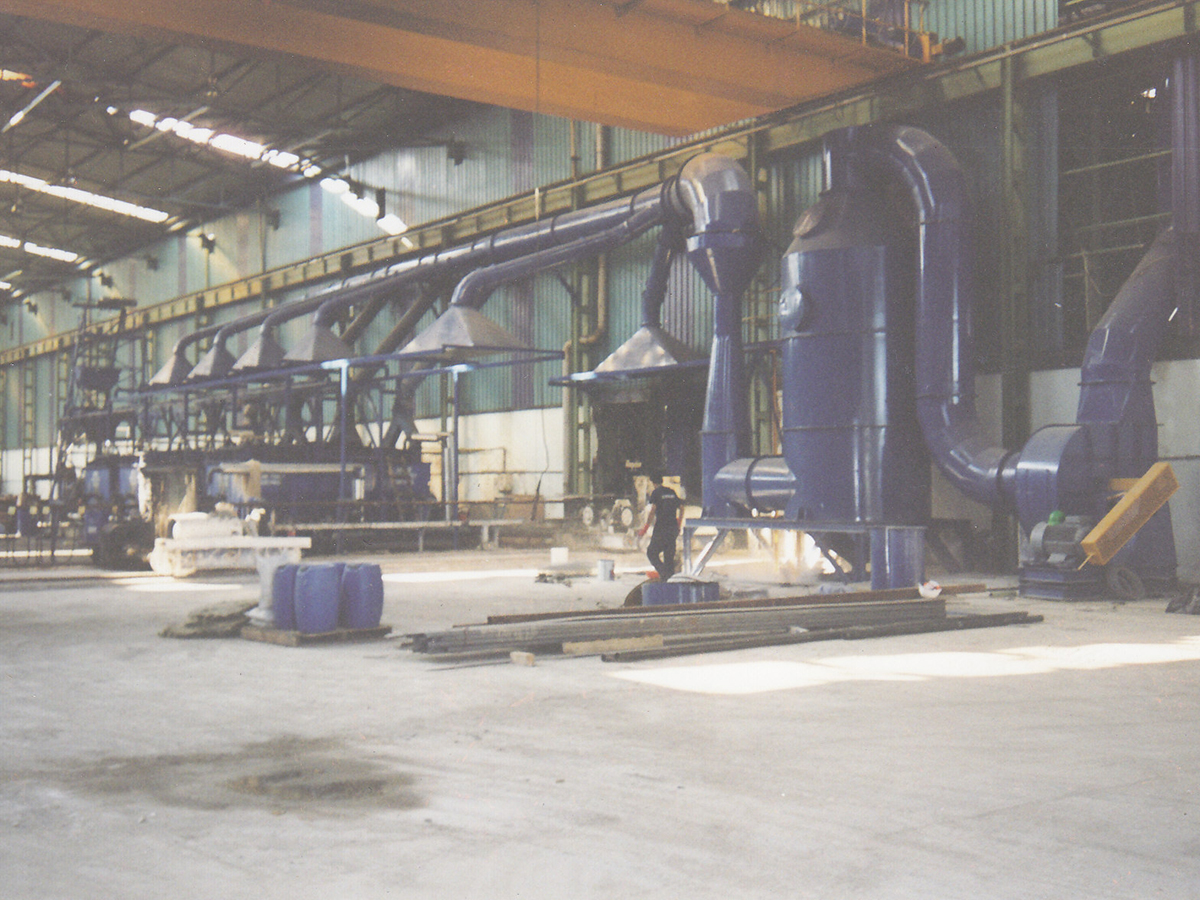
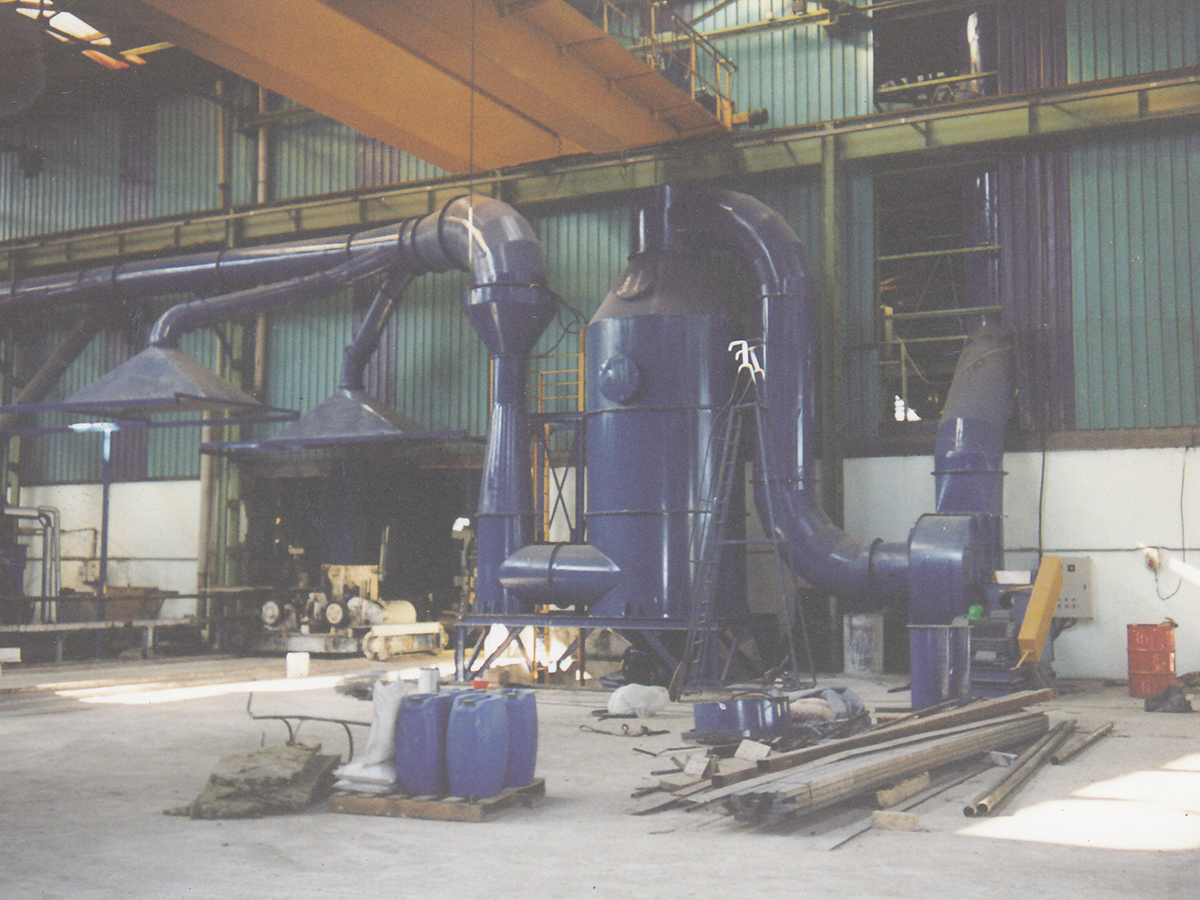
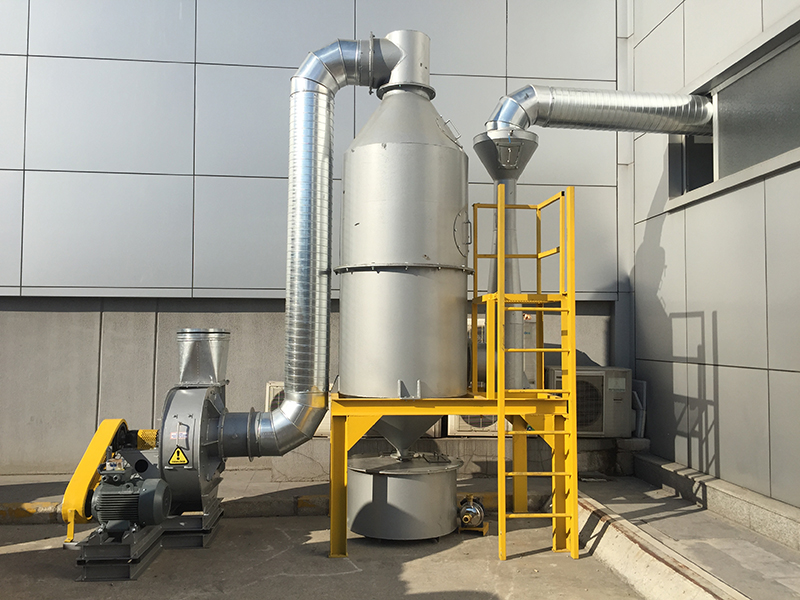
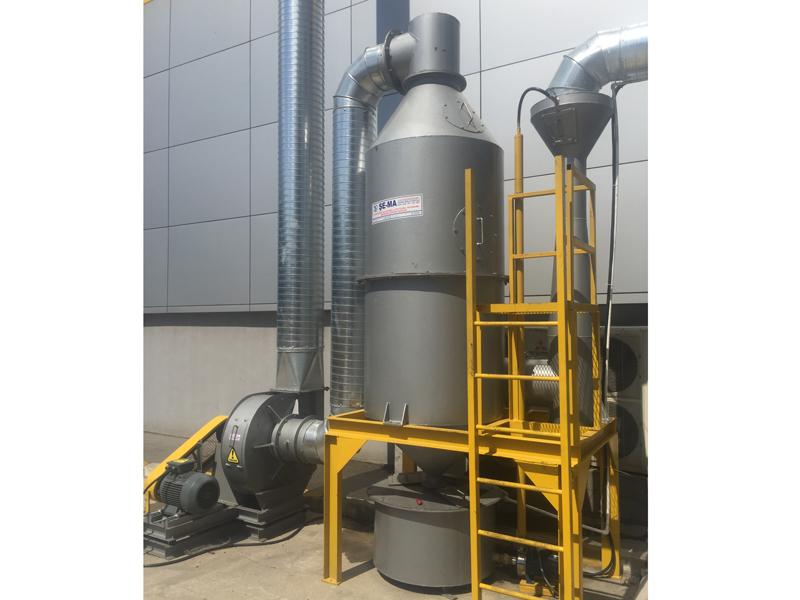
Venturi Scrubbers dust holder is a low energy venturi type wet washer. Unlike many other types of venturi scrubbers, Venturi Scrubbers have a downstream gas flow.
The working principle of Venturi Scrubbers is as follows: After the first contact of water and contaminated gas in the Venturi duct, a very dense mixture is obtained by continuous recirculation in the Diffuser section and the dust and mist retained in the cyclone following the helical holder is recovered. Figure 1 shows the general flow principle.
The gases enter the duct part of the Venturi Scrubbers at very high speeds (26 to 35 m / s) and here they come into contact with the circulating water from the feed tank through the nozzle of the circulating pump. The cleaning is liquid (in many cases is water) and consists of a mixture of muddy water and feed water from the cyclonic holder.
The pressure loss in the venturi duct is between 75 and 200 mm SS. This pressure drop corresponds to the amount of recirculation water to the duct and the Venturi Scrubbers dust catcher, which is proportional to the dust holding efficiency. The increase in the amount of water flow in the throat increases the pressure drop as long as the gas flow remains constant, and thus increases the holding efficiency of the Venturi Scrubbers.
Although all settings are made at the factory, the exact settings are made during operating. Essentially, the necessary adjustment is only to adjust the opening of the feed tank throat valve so that the pressure drop in the throat remains between 75-200 mm SS and accordingly it adjusts the feed water line hand valve.
Gases and circulating water rise upwards after the duct and rise together in the Diffuser. Due to this reduction in speed, a large part of the water is poured back into the throat and mixed again with the new gas flow.
This internal recirculation creates an extremely turbulent environment and increases the possibility of collisions with dust and liquid droplets. This internal recirculation is one of the features that make Venturi Scrubbers the world's best wet type dust trap.
A quantity of washing water, which also contains the dust contained in it, passes through the helical retainer. With the effect of centrifugal force and directionality created by these helical wings, they flow into the bottom sides of the holding roller in the form of dust and mud, which hit the walls of the upper part retainer, and from there they return to the feeding tank with the effect of weight.
There are three sections in the tank as can be seen in the detail picture of the feeding tank.
The muddy water with dust and / or molten gas flows in the middle chamber through the upper holder. This muddy water overflows into the first compartment where it is mixed with fresh feeding water. This new mix enters the duct by pressing the nozzles of the Venturi Scrubbers with the effect of the water pump from the adjusted opening of the duct valve.
The muddy water in the second chamber moves to the first section as an overflow at the same time again and is discarded from the mud. The amount of theoretical fresh feed water to the feeding tank must be equal to the total amount of water in the evaporation and the sludge in the mud. The required amount of feed water in the application depends on the type of water, dust and gases required to completely wet the Venturi Scrubbers. The amount of circulation water required for the Venturi Scrubbers can be adjusted between 270 and 960 liters / hr for every 1000 m3hr of gas. The required amount of fresh water is usually a very small amount of this recirculation value.
There are no moving parts in the Venturi Scrubbers, only the recirculation pump. Sludge concentration can be up to 30% and water consumption is very low. The dust retention efficiency for dusts larger than one micron is easily goes over 99%.